
1. Marketplace on American Public Radio interview
Most importantly, Kai Ryssdal interviewed Larry about painting curbs and driveways yellow and more.

2. NY Daily News
“Pssst, you can Beat Parking Tickets.”

Likewise, Larry was interviewed about parking tickets for the holidays.
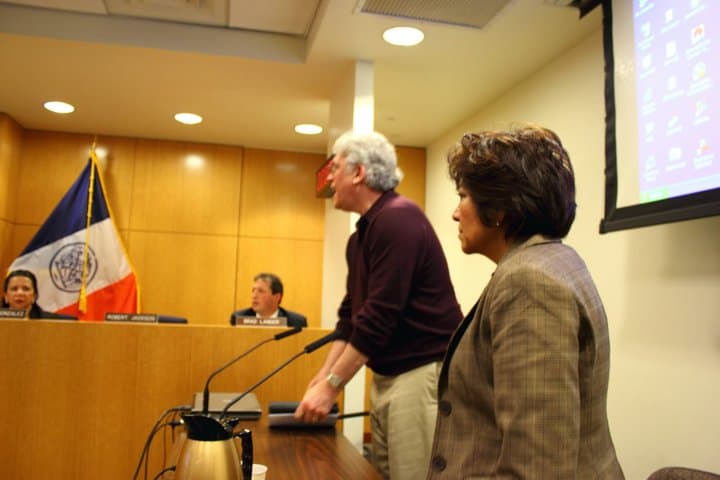
3. Larry was asked to speak about the new street cleaning bill at the NYC Council
4. Larry’s advice helps the driver beat 6 pedestrian ramp tickets ($160 each)
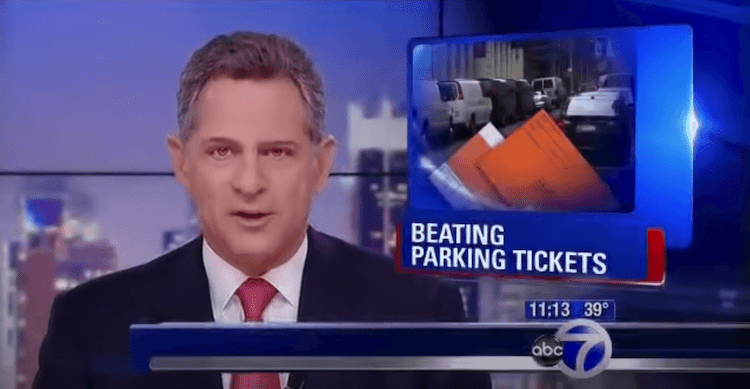
5. Larry appears on Eyewitness News
Meanwhile, it is an award-winning interview about NYC parking tickets.
6. Larry’s interview by Brian Sack on BSA
7. Larry’s interview with the Wall Street Journal about those horrible ASP sticky stickers
[November 2, 2011] The neon stickers slapped on cars that violate alternate-side parking rules—a much-loathed and nearly impossible-to-remove badge of shame for those who flout the law or just sleep in a little too long—may be getting a little tough love themselves…
Larry Berezin (that’s me, Mom), who runs a business that helps firms fight parking tickets and has a blog chronicling parking issues, said he gets many calls from people outraged about the stickers.
“You’re waiting for an hour and a half for the sweeper to go by, and if you’re not in the car, they decide they’re going to slap a sticker on you,” he said.
“People resent the stickers more than anything,” he added. “It takes days to get it off, and you never really get it off.”
8. The Daily News interviewed Larry for an article on a proposed new law
$100 Fine for Writing a Defective Parking Ticket
DenDecker proposed legislation that would punish a TEA for issuing a defective ticket. Meanwhile, some experts agree the legislation will not pass. But it may be music to the ears of motorists.
“As much as we might agree with its sentiment, we think the timing for it is not good right now,” said Robert Sinclair, a spokesman for AAA New York. “We need ways of finding more money for the city, not taking it away.”
Larry Berezin, Founder of New York Parking Ticket LLC, a company that helps drivers fight summonses, said most traffic agents are trying to do a good job even though there are a few bad apples.
It would be better to follow the agents whose tickets are always getting dismissed, he said.
“You weed out the guys that are abusing the system, and you do that by tracking the tickets,” Berezin said.
9. Larry was a passionate advocate for a law eliminating the pain of street cleaning days
“At the (NYC Council) hearing, a bill that would ease the pain of alternate side parking days received support from several Council members and individuals including livery cab advocates and a member of New York Parking Ticket, an advocacy group for motorists.”
[Source: “An Alternative to Alternative Parking” by Noah Rosenberg https://cityroom.blogs.nytimes.com/2010/11/09/an-alternative-to-alternate-side-parking-rules/]
10. New Yorker Spotlight: Larry Berezin on Why You Should Never Pay a Parking Ticket No Questions Asked
“No driver is ever shy about sharing their rage when being met with one of the pesky orange rectangles on their windshield, most will pay those violations no questions asked. And that’s a problem, according to lawyer Larry Berezin who says a very large percentage of NYC tickets are scam tickets.”